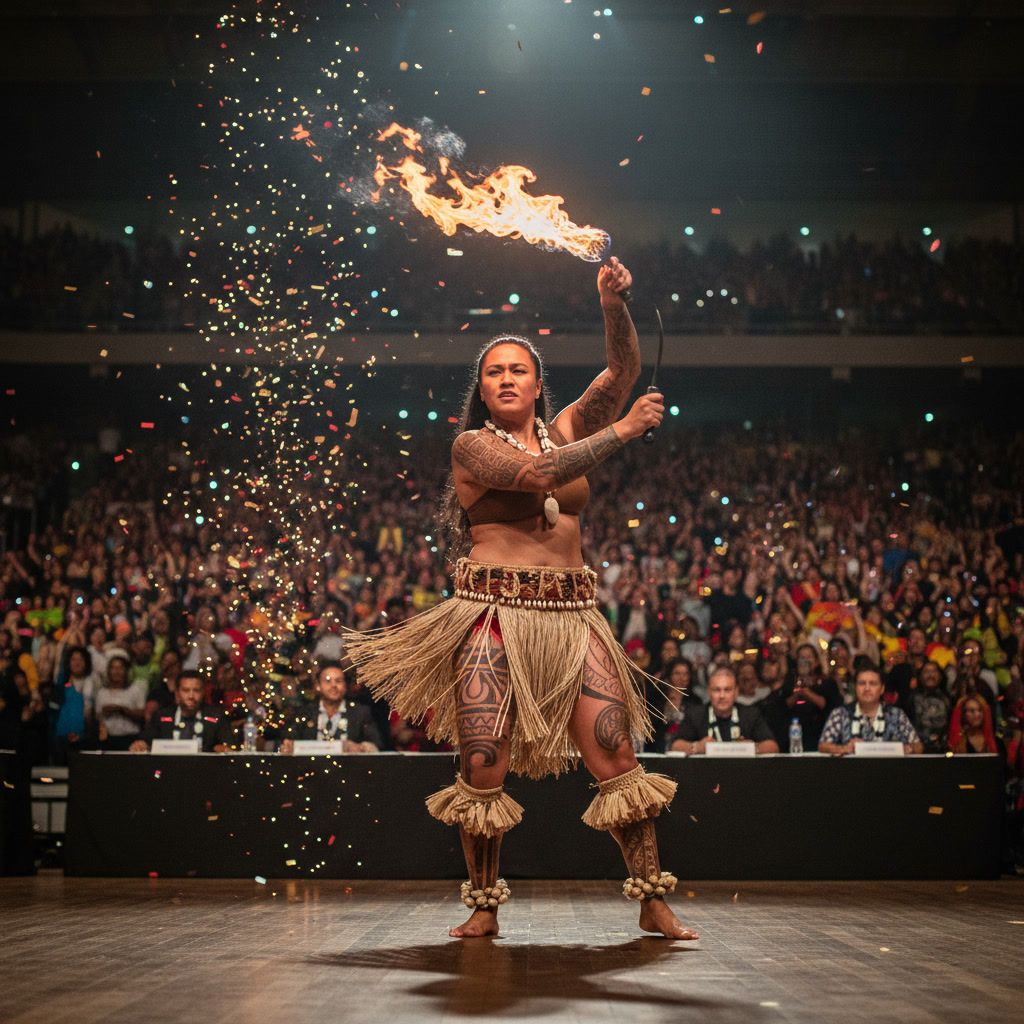
Fire knife dancing has long been associated with male warriors, but in recent decades, women have stepped into the circle with growing visibility and impact. At major events like the World Fireknife Championships, women’s divisions now feature competitors from Hawaiʻi, Samoa, Tahiti, and beyond, performing at extremely high levels of difficulty. Their presence is reshaping perceptions of who can carry the Siva Afi tradition forward.
Women on the Competition Stage
Competition results tell part of the story. Recent championships at the Polynesian Cultural Center have crowned women’s champions such as Aliyah Galea‘i-Ava and Moeatalagi Schwenke, highlighting how female dancers can match the speed, strength, and technical precision of their male counterparts. Earlier events showcased “lady warriors” who performed with remarkable skill, even when their numbers were small compared to the men’s division. As more young girls see these role models on stage, interest in learning fire knife continues to grow.
Cultural Precedents for Female Performers
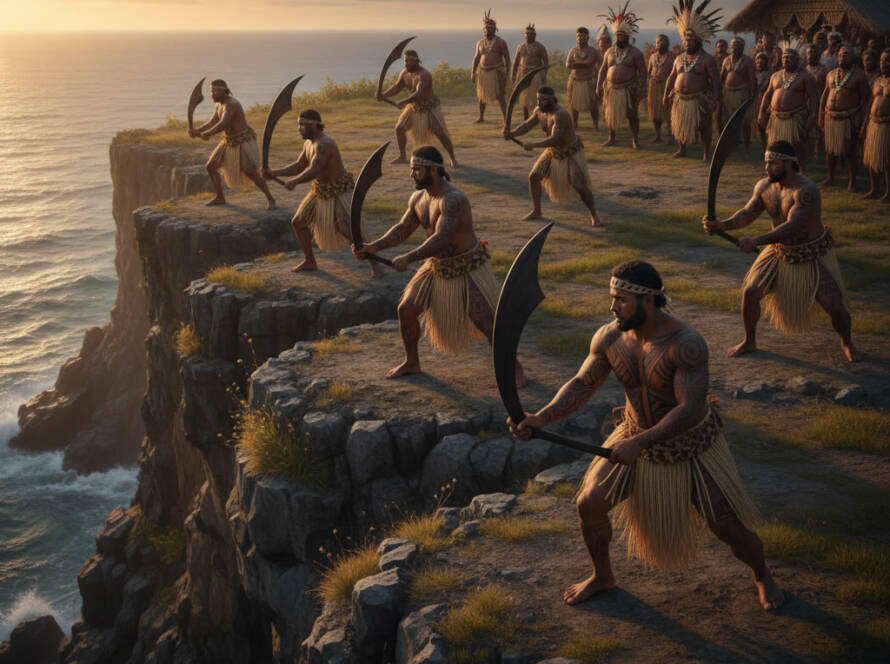
Culturally, this development is less of a break than it might seem. Historical accounts of ailao note that daughters of chiefs sometimes led processions, displaying weapons with skill and grace in ceremonial contexts. While warfare itself was male-dominated, public exhibitions of agility and leadership could involve women. Modern female fire knife dancers can be seen as reviving and reinterpreting that space, stepping proudly into roles of visibility and cultural representation.
Training, Discipline, and Determination
Training for female dancers is just as rigorous as for male dancers. Many start young, practicing basic spins and catches with unlit knives or sticks before progressing to live flame under close supervision. They attend workshops, learn from established champions, and often come from families where fire knife is a multi-generational tradition. On stage, they face the same physical demands and risks, but also the added challenge of overcoming outdated assumptions about who “should” perform this art.
Expanding the Art’s Creative Future
The presence of women in fire knife dancing helps expand the art’s future. With more participants, there is greater innovation in choreography, musical interpretation, and storytelling. Women bring individual perspectives and creative choices that broaden what a fire knife routine can look like while still respecting Samoan roots. This diversity strengthens the tradition and keeps it vibrant for the next generation.
Impact on Audiences and Young Viewers
For audiences, seeing women perform Siva Afi can change how they think about courage and cultural guardianship. The image of a female dancer confidently spinning flaming knives challenges stereotypes and invites young viewers—especially girls—to imagine themselves in powerful roles. It sends a clear message that cultural arts can be shared responsibilities, not closed clubs.
Supporting an Inclusive Fire Knife Community
Teams that support and collaborate with female fire knife dancers are helping to shape this future. By opening training spaces, sharing knowledge, and inviting women into high-profile performances, they contribute to a more inclusive and resilient community around Siva Afi. This is not about replacing traditions, but about allowing them to grow naturally as more people feel called to participate.
Mana Fire Knives and the Next Generation
Mana Fire Knives is part of this evolving landscape, grounded in Samoan tradition yet performing for modern audiences that include young women and girls who may be seeing fire knife for the first time. The group’s approach to honoring culture, safety, and excellence makes it a strong example for anyone considering a path into the art, regardless of gender. Readers who want to know who trained the performers, what their family influences are, and how they view the future of fire knife can find those stories on the Mana Fire Knives About page. Learning about the people behind the flames reveals how the tradition is being kept alive for everyone.