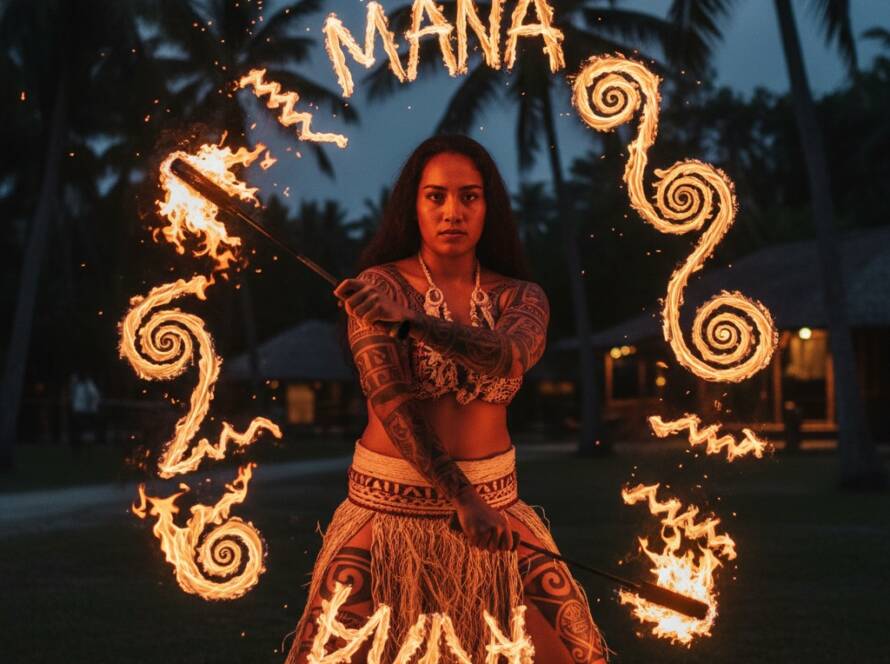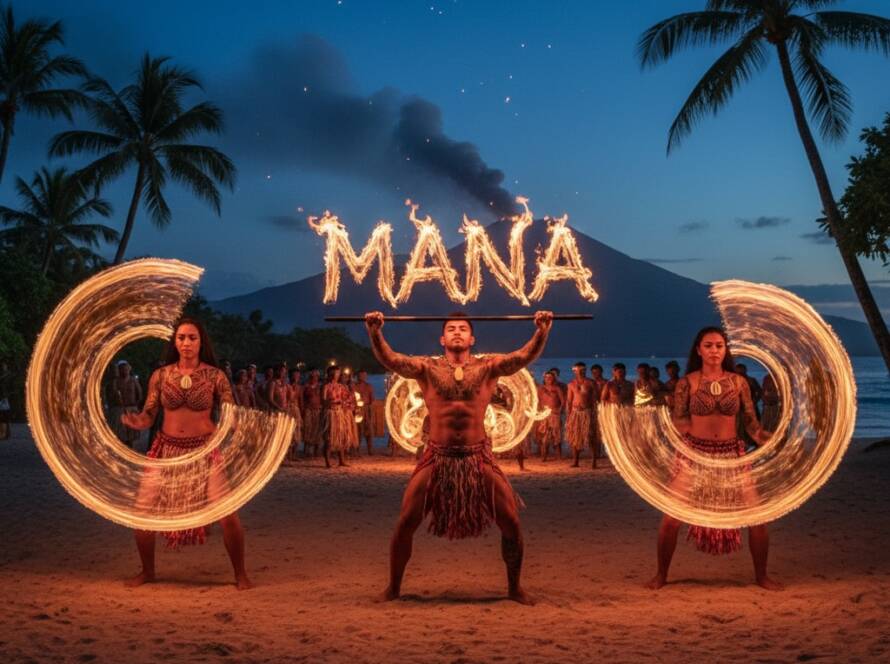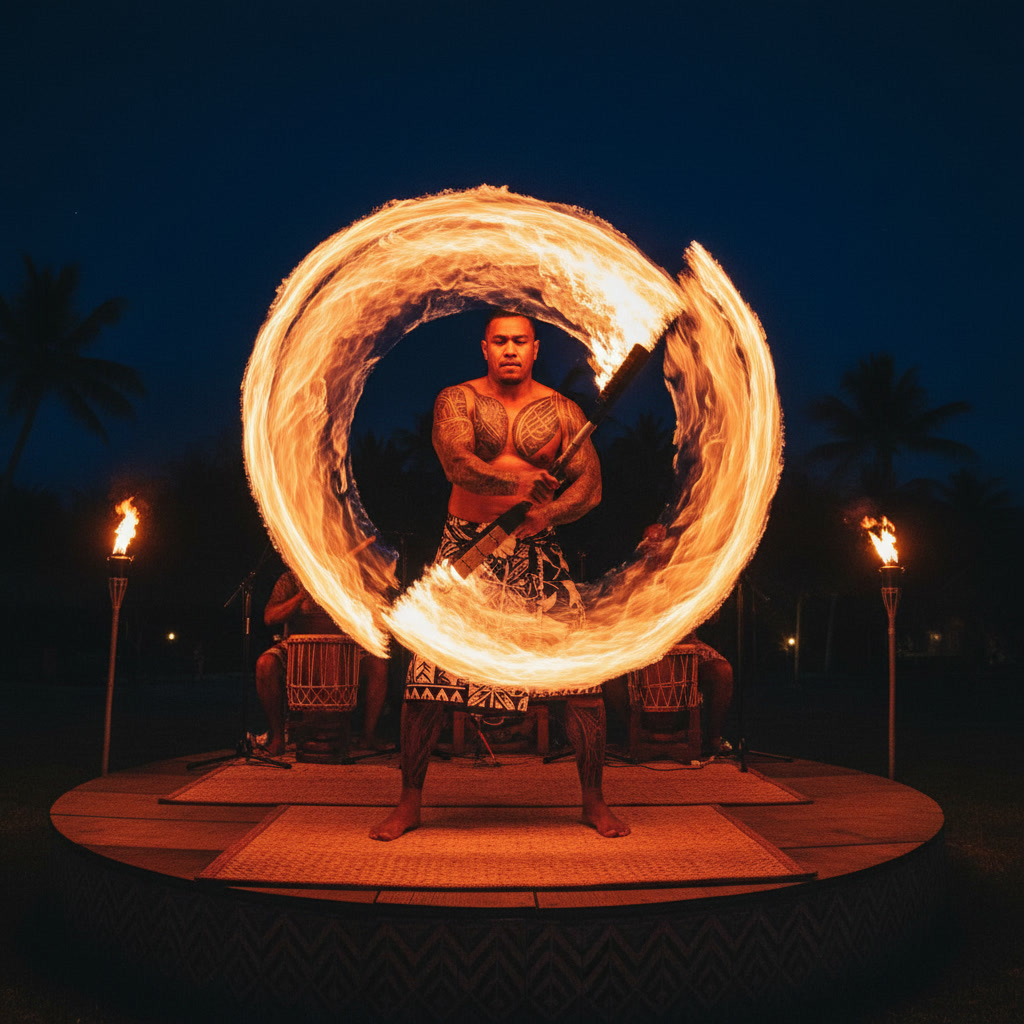
If you have ever watched a performer spinning a flaming blade in the dark, leaving circles of fire hanging in the air, you have probably seen Samoan fire knife dancing. Known traditionally as Siva Afi or Ailao Afi, this art form combines warrior technique, storytelling, and extreme skill with the raw power of live flame. Mana Fire Knives exists to keep this tradition alive, presenting it in a way that is both thrilling for audiences and deeply respectful of its Samoan roots.
The Warrior Roots of Siva Afi
At its core, fire knife dancing comes from the older Samoan practice of ailao, a ceremonial exhibition of a warrior’s prowess. In ailao, fighters would twirl and manipulate a war club or weapon called the nifo oti, often edged with shark or other fish teeth, to demonstrate strength, precision, and readiness for battle. This was less about performance for outsiders and more about showing courage, discipline, and the spirit of the village or chief the warrior represented.
From Combat Display to Ceremonial Dance
Over time, this warrior display turned into a dance performed at important gatherings and ceremonies. Dancers would swing and toss weapons and torches, moving in powerful, rhythmic patterns that echoed warfare training and ancient legends. The transition from pure combat drill to ceremonial art laid the foundation for what would eventually become modern fire knife dancing.
How Fire Entered the Dance
The “fire” in fire knife dancing arrived later, as performers began wrapping the ends of their knives or clubs in material such as towels or plant fibers, soaking them in fuel, and setting them ablaze. In the traditional description, the implement started as a machete wrapped in towels at both ends, with a section of the blade still exposed in the middle. When lit, the dancer would spin, toss, and catch this weapon, sometimes combining it with acrobatic flips and dives, surrounding themselves in arcs of flame.
Modern Performances and Safer Tools
Today’s performances, like those presented by Mana Fire Knives, build on this foundation but adapt it for modern stages, events, and safety standards. Many commercial shows now use specially made fire knives with modified blades or even metal rods instead of fully sharpened weapons, reducing risk while preserving the visual impact and spirit of the dance. Even with these adaptations, the essence remains the same: a skilled performer demonstrates mastery over danger, movement, and rhythm while honoring Samoan heritage.
Music, Costuming, and Cultural Identity
The music and costuming further root the dance in culture. Drums drive the pace, from slow, deliberate spins to explosive bursts of motion where the knife flies high into the air. Traditional Samoan-inspired attire, tattoos, and chants reinforce that this is not just a stunt show, but a continuation of a lineage that stretches back centuries. For many dancers, including those at Mana Fire Knives, performing Siva Afi is a way of carrying forward the stories and values passed down by elders and ancestors.
What It Takes to Perform Siva Afi
For anyone seeing fire knife dancing for the first time, it can look almost superhuman. The reality is that the art is built on years of training, repetition, and respect for the flame as well as for the culture that created it. Mana Fire Knives brings together performers who have dedicated themselves to this path, combining technical excellence with cultural responsibility. To understand who they are, where they trained, and what the art means to them personally, readers can be guided to the Mana Fire Knives About page, where the full story of the team and its mission is shared.