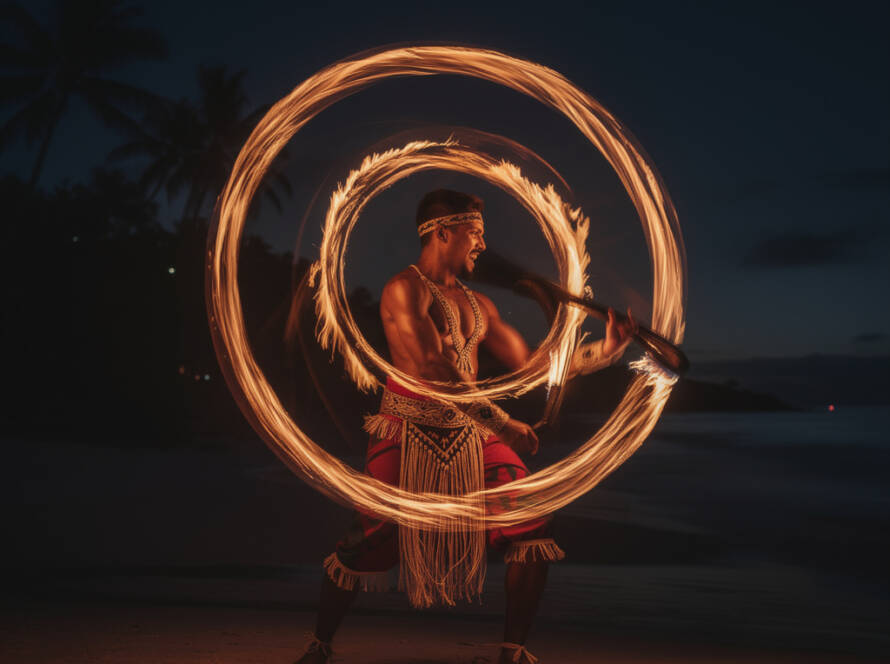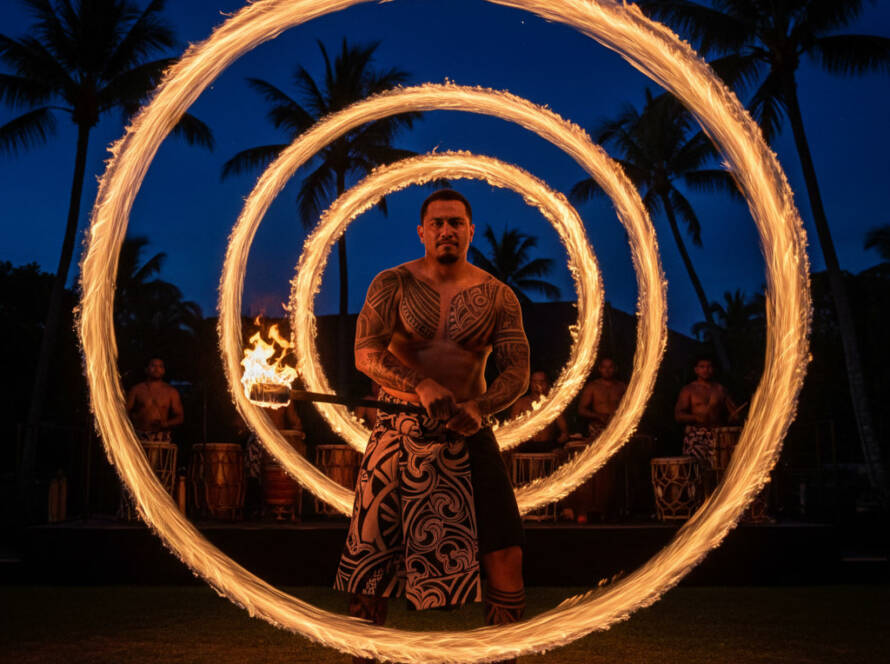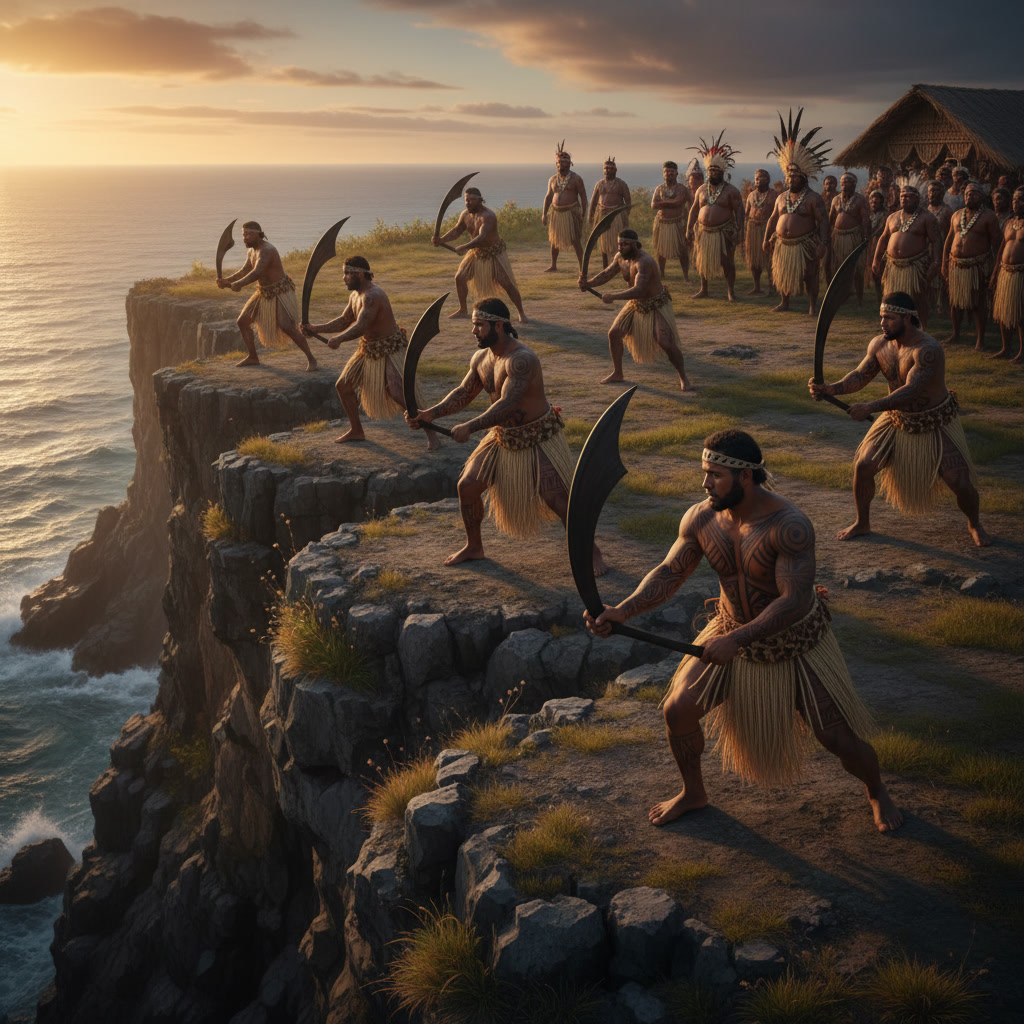
Modern fire knife dancing, as many people recognize it today—fast, acrobatic, and centered on a flaming blade—took shape in the mid-20th century. While the roots go back to ancient ailao warrior exhibitions, a key turning point came when performers began systematically adding fire to the knife in entertainment settings. The result was a new form of performance that blended tradition with showmanship and quickly spread across Polynesian stages.
Early Fire Knife Experiments
Accounts of the early fire knife era describe dancers using machetes or nifo oti-style blades wrapped at both ends with towels or plant fiber. These wraps were soaked in fuel, then ignited, leaving a short section of exposed metal between the two flames. Dancers would spin, toss, and roll this flaming knife across their bodies, creating rings and spirals of fire as they moved. In dark environments, the effect was overwhelming, and audiences reacted with a mix of awe and fear.
Fire Knife and the Rise of Luau Entertainment
As tourism and Polynesian shows grew in Hawaiʻi and beyond, fire knife dancing became a signature closing act in many luaus and cultural performances. The demand for multiple nightly shows, along with the real danger of sharp blades and open flame, prompted changes in the equipment. Over time, many commercial performers shifted toward using wooden or metal poles with wrapped ends instead of fully sharpened weapons, balancing visual drama with safety and practicality.
Innovation in Technique and Choreography
Even as the tools evolved, the spirit of innovation remained. Dancers pushed the physical limits of what could be done with a flaming knife: higher throws, faster spins, behind-the-back catches, and combinations with flips or ground acrobatics. The tempo of the accompanying music increased, and routines became more choreographed, turning the dance into a high-intensity showpiece while still retaining the core techniques derived from ailao.
The Role of Competition
Competitions helped drive this evolution. Events such as the World Fireknife Championships at the Polynesian Cultural Center formalized the art into categories and judged performances on difficulty, control, and stage presence. Over the years, champions from Samoa, Hawaiʻi, Tahiti, and beyond have introduced new tricks and combinations, raising the global standard for what a top-level fire knife performance looks like. Women’s and duet divisions have also expanded participation and pushed creative boundaries.
Fire Knife on the Global Stage
Modern fire knife dancing now travels far beyond Samoa and Hawaiʻi. Cruise ships, resorts, cultural festivals, and private events across the world feature fire knife as a centerpiece of “Polynesian nights.” This broad visibility has helped spread awareness of Samoan culture but has also created challenges, as not every show is equally grounded in authentic practice. Some performers use simplified props or generic “fire dancing” without understanding the history and meaning behind Siva Afi.
Carrying the Tradition Forward
This is where groups like Mana Fire Knives play an important role. The team represents a bridge between the ancient and the modern—using safe, performance-ready tools and contemporary staging while still honoring the Samoan stories, movements, and values at the heart of fire knife dancing. By dedicating themselves to both technical excellence and cultural integrity, they carry forward the legacy of earlier innovators while keeping the art rooted in its homeland.
The People Behind the Flames
For anyone who has seen a fire knife performance and wondered who has the courage and commitment to do this night after night, the answer lies in the lives of the dancers themselves. Their training, family influences, and personal reasons for embracing Siva Afi make up the human story behind the flames. Directing readers to the Mana Fire Knives About page allows them to meet the people behind the knives, understand their journey, and appreciate how seriously they take the responsibility of carrying this powerful art into the future.