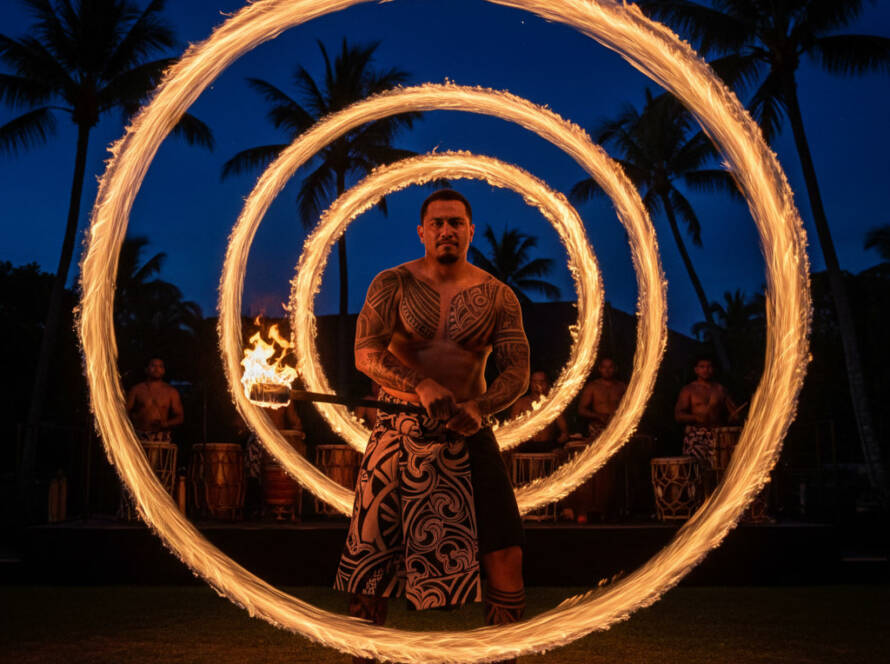
For most people, fire knife dancing is a few electrifying minutes at the end of a luau or show. For a professional performer, it is a lifestyle built around discipline, training, and respect for the flame. The men and women who step into the fire with Mana Fire Knives do not just show up, light a knife, and improvise. Their day is shaped by preparation—physical, mental, and cultural—that audiences rarely see.
Physical Training and Daily Practice
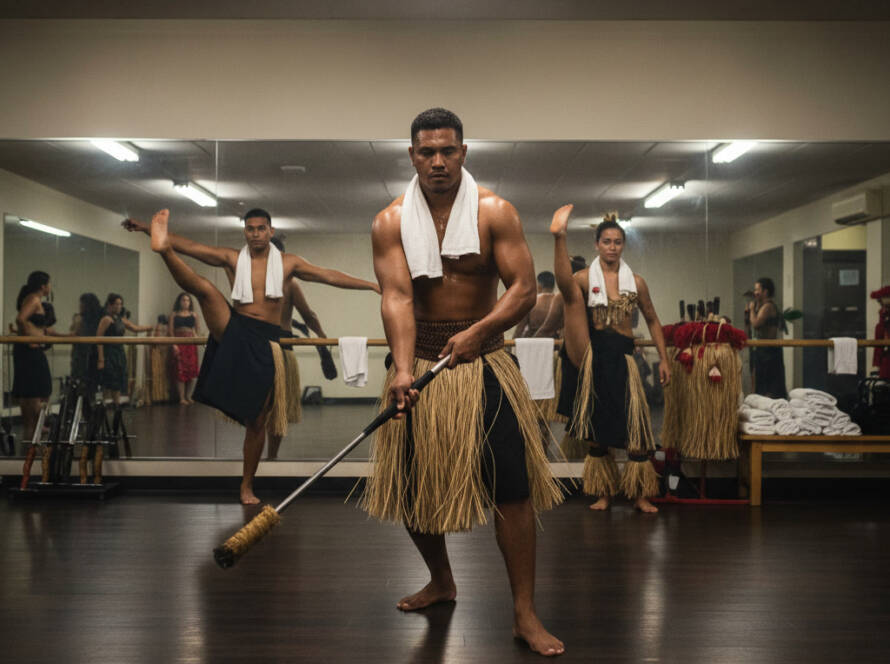
Physical training is a foundation. Fire knife performers need strong shoulders, wrists, and core muscles to control heavy spinning knives at high speeds. Many spend years practicing with unlit knives, wooden training sticks, or metal rods before they ever perform with live fire in front of a crowd. Daily routines can include stretching, strength exercises, and drilling basic spins and catches until they become second nature. This constant repetition is what allows dancers to make dangerous tricks look effortless when the flames are finally lit.
Caring for the Equipment
The equipment itself requires attention. A traditional fire knife began as a machete wrapped with towels at both ends and soaked in fuel, leaving a section of blade exposed in the middle. In modern performance, many troupes use specially built knives or metal rods with fixed handles and fireboards that securely hold the wicking material, following guidelines similar to those used in major competitions. Performers inspect their knives daily, checking for loose fittings, worn wicks, or structural damage before they ever step on stage.
Safety Preparation and Protocols
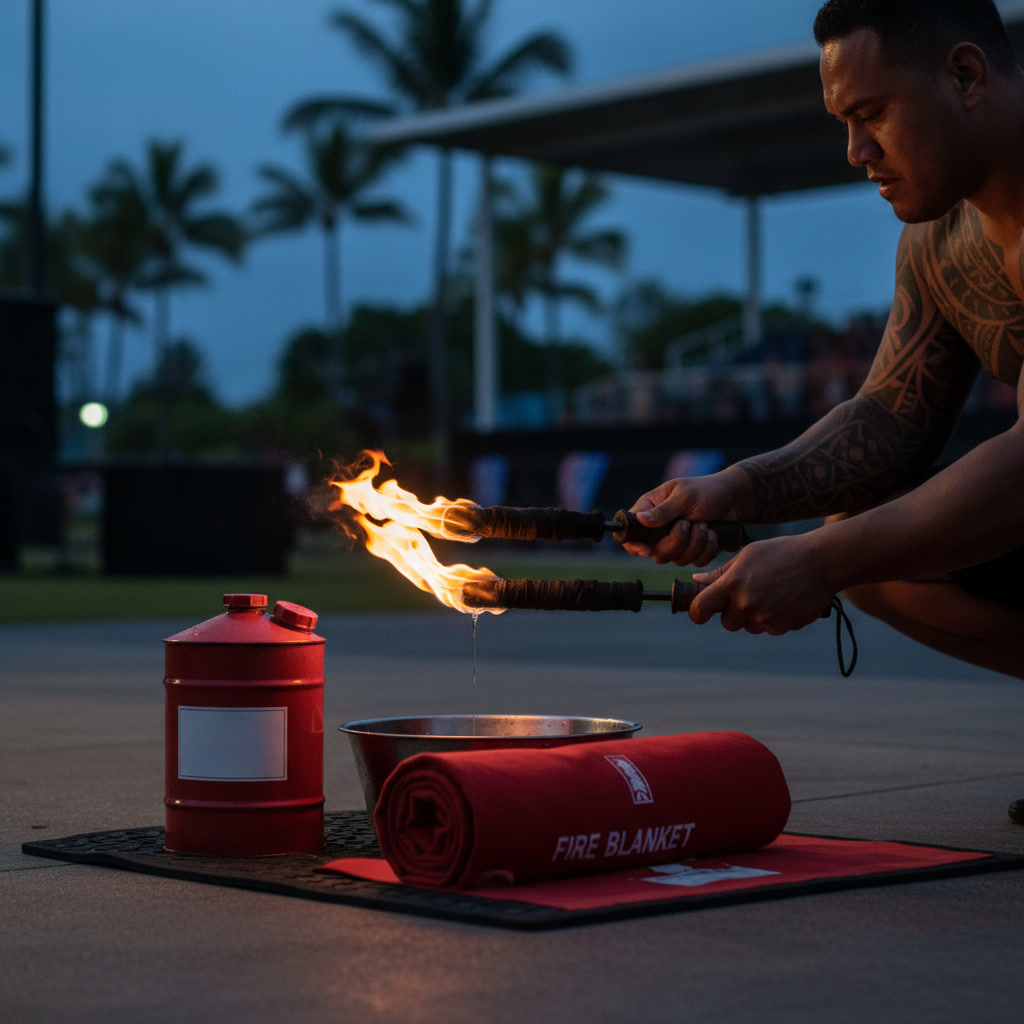
Safety preparation is just as important as physical training. Professional fire performers follow strict fueling and lighting protocols—dipping wicks for only a few seconds, wiping off excess fuel, and ensuring all containers are sealed and kept away from ignition sources. A designated safety person or spotter stands by with a fire blanket or damp towel, watching the performer and the surroundings in case of stray sparks or small fuel spills. This level of care allows audiences to enjoy the show without realizing how many precautions make it possible.
Rehearsals and Show Readiness
Rehearsals often take place long before the audience arrives. Dancers from teams like Mana Fire Knives run through their routines, fine-tuning timing with the drummers and adjusting spacing for each new stage. A routine can include single-knife and double-knife segments, each with specific tricks such as over-the-shoulder catches, between-the-legs passes, or aerial throws that must match the music and the beat of the drums. If even one detail feels off, performers go back and run it again, knowing that under live flame there is no margin for sloppy technique.
Mental Focus and Cultural Responsibility
Mental preparation also plays a big role. Handling fire requires a calm, focused mindset that balances confidence with caution. Many dancers develop their own rituals—breathing exercises, quiet time before the show, or personal prayers—to center themselves before stepping into the light. For Samoan fire knife performers, this often includes a sense of cultural responsibility, remembering elders, teachers, and ancestors who passed down the art.
When the Show Begins
By the time the audience sees the show, hours of unseen work have already happened. Costumes are checked, drums are ready, the performance area is cleared, and the knives are fueled. When the lights go down and the first flame catches, the dancer is relying on muscle memory built over years, trusting training and teamwork to carry them through every spin, toss, and catch.
The People Behind Mana Fire Knives
For Mana Fire Knives, this behind-the-scenes dedication is part of what defines the group. The team’s About page is the best place for audiences and event planners to see who these performers are, how they trained, and why they commit themselves to such a demanding art. Reading their individual stories gives deeper meaning to every moment they spend behind the flames.